
Learning to Live with Ridicule
Promise at DawnThis thread follows the humiliations that reshape the narrator’s self-image, from childhood shame toward humor as a defense of human dignity.
increasing Bearing strength in each event
 decreasing
Bearing strength in each eventdecreasingA Public Prediction
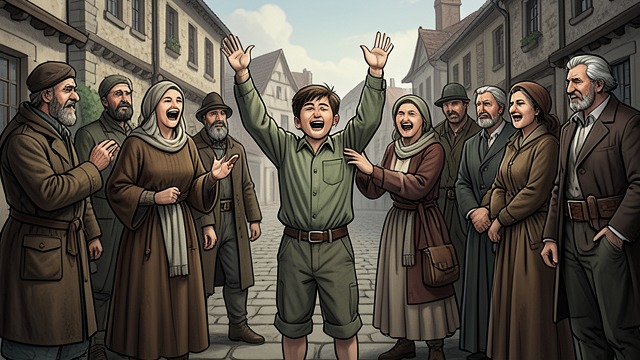
A Public Prediction
His mother’s declaration
His mother announces his future greatness to skeptical neighbors. The claims expose the boy to laughter before he has any power to fulfill them.
Shame becomes material
The experience leaves a lasting mark. He later treats the ridicule not simply as an injury but as a force that helped shape his character.
The Safe Woodpile
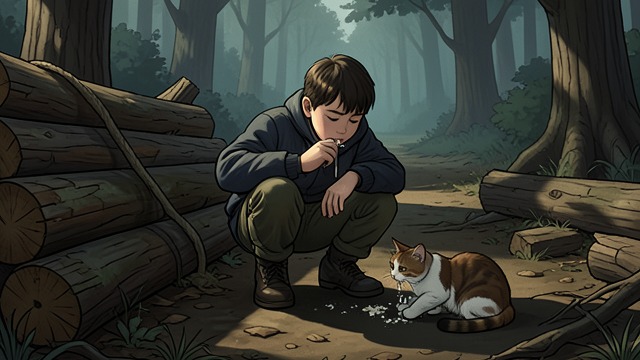
The Safe Woodpile
Escape from the crowd
The boy hides among stacked logs, seeking a private world beyond the neighbors’ contempt. In despair, he considers bringing the woodpile down upon himself.
A small rescue
A hungry cat licks crumbs from his face. The creature’s warmth and company restore a fragile interest in living.
The Tennis Court
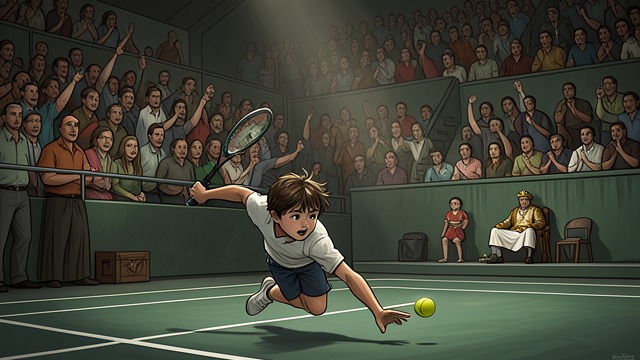
The Tennis Court
A forced performance
His mother persuades King Gustav V to let the inexperienced boy play. He runs and dives under the gaze of a crowd, barely touching the ball.
Courage without success
The king pays his subscription because the boy has shown determination. The scene teaches him that dignity can survive a public failure.
The Comic Weapon
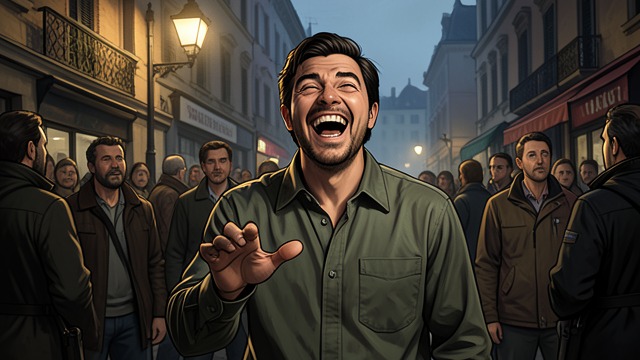
The Comic Weapon
Laughing at himself
As setbacks accumulate, the narrator learns to turn humiliation into comic performance. Self-mockery gives him distance from a world that repeatedly refuses his ambitions.
A claim about dignity
He sees humor as a way of resisting the limits imposed on human beings. It does not erase pain, but it keeps pain from having the last word.
A Smile at the End

A Smile at the End
No simple victory
The narrator lies on the shore, aware that his life has not made the world just. His mother’s death has also ended the possibility of the reunion he spent years imagining.
A chosen response
He refuses to turn defeat into a universal lesson of resignation. His smile preserves a measure of the courage and humor that ridicule once threatened to destroy.
At age eight in Vilna
Immediately after the neighbors’ laughter
At about fourteen in Nice
During adolescence and early adulthood
At Big Sur, near the book’s ending
